As part of my role and responsibilities for creating Let’s Talk, I had the task of developing the Script and managing the content throughout the app. This involved writing the dialogue for the chapters with the information about the changes boys and girls experience during Puberty, How Babies are Made, and Consent. I also brainstormed ideas for the animations which the characters feature in to create a scenario a young person may find themselves in such as a boy’s voice breaking, a girls first period and explaining the different body shapes boys and girls have. I wrote the dialogue for these animations which I then gave to the lead animator within the group who could use this for reference when illustrating the backgrounds, characters and animating the scenes.
To begin the process of writing the script for Let’s Talk I began researching methods on storytelling, writing for animation and writing for multimedia and visual media. A book by Michael D. Korolenko entitled ‘Writing for Multimedia: A Guide and Sourcebook for the Digital Writer’ was very helpful in explaining the steps involved in writing a script.
“The Writer must deal with six considerations during preproduction: The Idea, The Audience, Brainstorming, Goals and Objectives, The Treatment and the Content Outline.” (Korolenko, 1997)
The idea: The idea is the first step of the project and deals with what the project will do and gives the project a “terminal object” meaning what the users will be able to do when the course is completed. In my case it is a project which provides children with the information they need as they experience puberty in a modern, story-based and interactive way.
The Audience: Finding the target audience for any multimedia project is the main focus when it comes to the design aspect. We need to know the knowledge our users have when creating a learning program such as Let’s Talk. Carrying out the Assure Model was helpful in doing this as it gave an insight to who the learners are. The Target audience will be children ages 8-14. It is important to understand who we are designing and writing for so the users can get the most out of their experience with the application.
Brainstorming: “Brainstorming, sometimes called “free association”, is when one approaches a subject from every conceivable angle, writing down ideas as they come. During an interactive multimedia project, brainstorming often occurs in a group of writers, designers and directors all working together to think up ideas and jot them down” (Korolenko, 1997) I used the brainstorming technique at the beginning of writing the content to help narrow down what topics needed to be covered for both boys and girls. I used this method again when coming up with ideas for storylines in the animation which the characters would experience such as buying your first bra.


Goals and Objectives: Goals and objectives are knowing what you want the user to learn and what the message of the project is. The goal of Let’s talk is children will have a safe interactive and fun tool where they can learn about Puberty and Sex education. The objectives of Let’s Talk which will be the steps users must do to achieve the goal will be in the form of quizzes and animations. Using the “CABD” format: Conditions, Audience, Behaviour and Degree, the objectives for Let’s Talk are:
- C = Conditions: “Chapter about Girls Body Changes is read..”
- A = Audience: “the child”
- B = Behavior: “will be able to label the parts of the female anatomy”
- D = Degree: “100% correct”
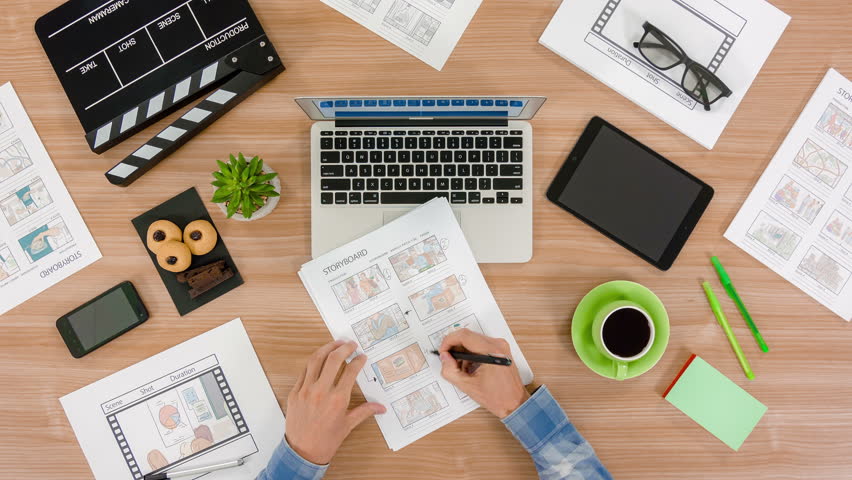
The Treatment: “The treatment is the written summary of what one wants the final multimedia product to look like and how the user will interact with the product” (Korolenko, 1997) The treatment determines the “flavour” of the program whether it is selling something or is funny, serious or informative. Getting the treatment done early is important as it is the guide for the script writer and how the programs navigation will work. Using storyboards can be useful in making the treatment visual.
The Content Outline: “The Content outline is a specific list of what will actually be included in the project” (Korolenko, 1997) Doing this will ensure that all group members are on the same page and are aware of what is needed for the application.
When researching material online and in books I accumulated the information needed for the app and started writing the script for each chapter. In order to learn about the topics of Puberty and ensure I was using the correct terminology I watched Youtube videos such as WellCast (WellCast, 2014) and AMAZE (AMAZE Org, 2016) which helped with explaining the various chapters such as periods, erections, hygiene, how babies are made and consent.
My aim was to write a script which was appropriate for young people and wasn’t too complicated like a biology textbook. I also kept this in mind when writing the dialogue for the characters. The characters speech needed to sound natural and believable in what they were saying as well as being suitable for what was on screen. Some characteristics to take into consideration when writing the dialogue of the characters are Age, gender and education. The age of the users will be between 8-14 so the characters needed to sounds relatable to that age group.
Gaining an insight into how Dialogue plays an important factor in storytelling helped me to understand essence of good dialogue. It depends on may factors such as who the characters are, their relationships, the situation they are in, the length of the script as well as the age of the target audience. I learned the difference between different types of dialogue that can be used such as “Real Talk” and “Reel Talk”. “Real Talk” is more natural, like how we sound in our every day lives We talk with “uhhs” and “ahms” during pauses and use jargon and colloquialisms.


“Emotions change dialogue. Keep it simple; less is more. The words must always be easily understandable and clear to everyone. You might want to repeat important story points, especially for preschoolers, but repeat with a twist” (Wright, 2013)
Repeating that changes which happen during puberty are normal was an important lesson to repeat for the users of Let’s Talk. I wanted to make it clear in the animations that when something happened for the first time that the characters were reassured that this was normal. I also wanted the script for the information in the chapters to reiterate this point also. In doing so, children will not have any doubts about what is happening to their bodies at such an awkward time in their lives.
References
AMAZE Org (2016). Top Signs Boys are in Puberty. Available at: https://www.youtube.com/watch?v=onggxBVl4qw&t=3s [Accessed 13 Apr. 2019].
Korolenko, M. (1997). Writing for multimedia. Wadsworth Publishing Company, pp.110,111,113,114,115,116,117.
WellCast (2014). What is Puberty? Decoding Puberty in Girls. Available at: https://www.youtube.com/watch?v=Tr8ZSH3eghs [Accessed 12 Apr. 2019].
Wright, J. (2013). Animation Writing and Development. Burlington: Focal Press, pp.196,197.
 Let's Talk - Project Blog