Character Animator CC

From my previous knowledge on creating animations I have exclusively used Adobes After Effects. When talking with my lecture on the best way of creating the animations for the app, the application of Adobe Character Animator CC came up. I have never used the software before so my first task was to learn how it worked. Adobe Character Animator CC is a software that allows for the animation of characters facial expressions and body movement by combining live motion capture through a webcam with a multi track recording system were you can control layered 2D characters that are drawn using Illustrator or Photoshop. (Adobe.com, 2019)

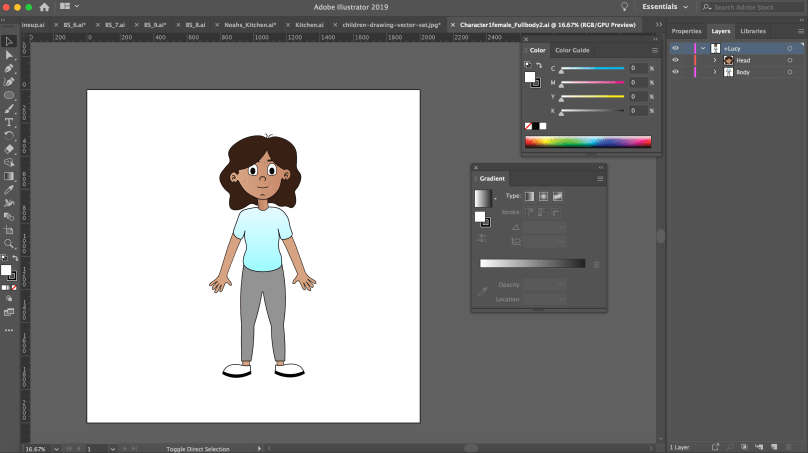
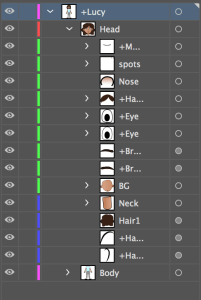
After reading up on what the software, I downloaded it onto my laptop. The best source of information I could find on how to use Character Animator was the Youtube Channel “Okay Samurai”. The channel is run by Adobe Character Animator designer Dave Werner. (Werner, 2019) He has multiple videos on how to use the software. I started watching his video “Making Your First Character- ARCHIVED (Adobe Character Animator Tutorial)” (Werner, 2019), as I watched I took notes on how to draw a character in illustrator. I found it great that Illustrator and Character Animator are linked, so when I need to change something with the Illustrator file it would automatically change in Character Animator. I learned how to label the layers correctly, how to a-range the layers, the importance of putting “+” in front of layers that could move independently within Character Animator and how to group paths together to form a group. 

Screen Shot 2019-04-25 at 14.35.02

Screen Shot 2019-04-25 at 14.34.47

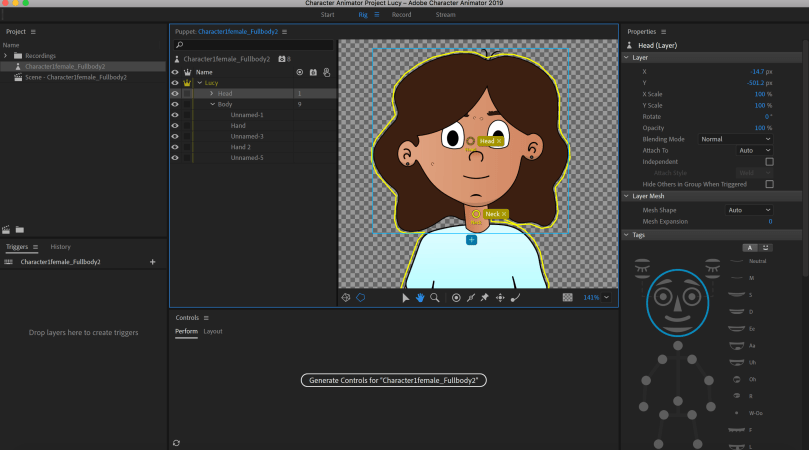
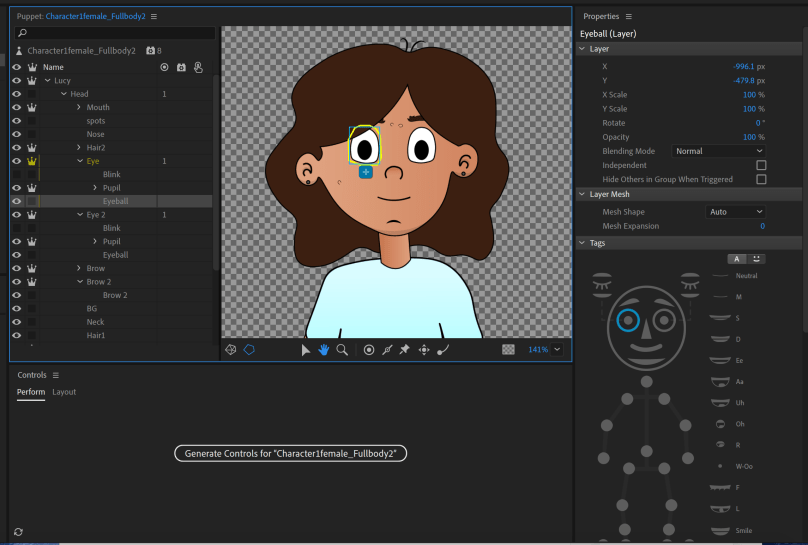
The next thing I learned how to highlight the layers I had created in Illustrator and tag them within Character Animator. When I had them all tagged correctly I went back into my scene.

Screen Shot 2019-04-25 at 14.32.47.png

Screen Shot 2019-04-25 at 14.33.16

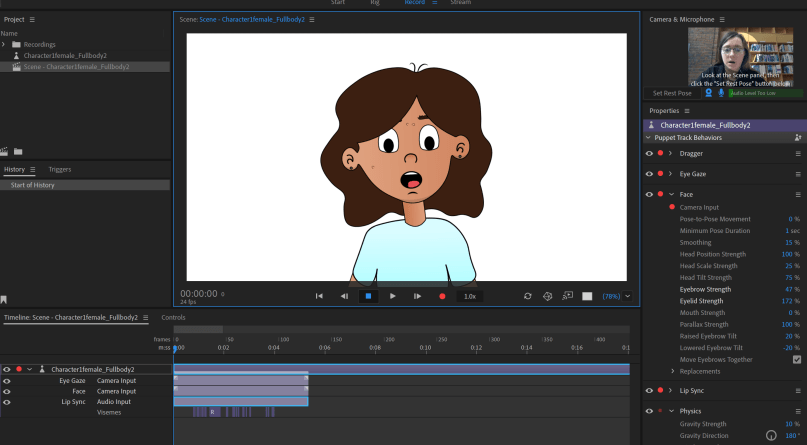
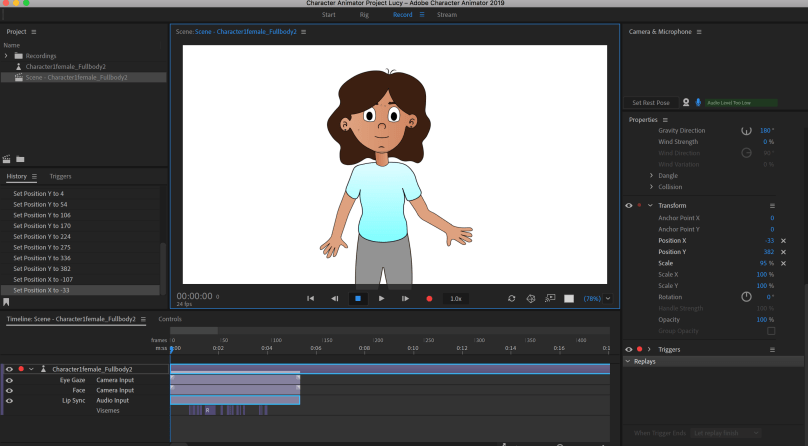
The next step was experimenting with my facial expressions to see if the character would move. I learned that moving my own face would tigger the character to copy. The character would copy my blinking, head movements and lip sync.

Screen Shot 2019-04-25 at 14.33.39

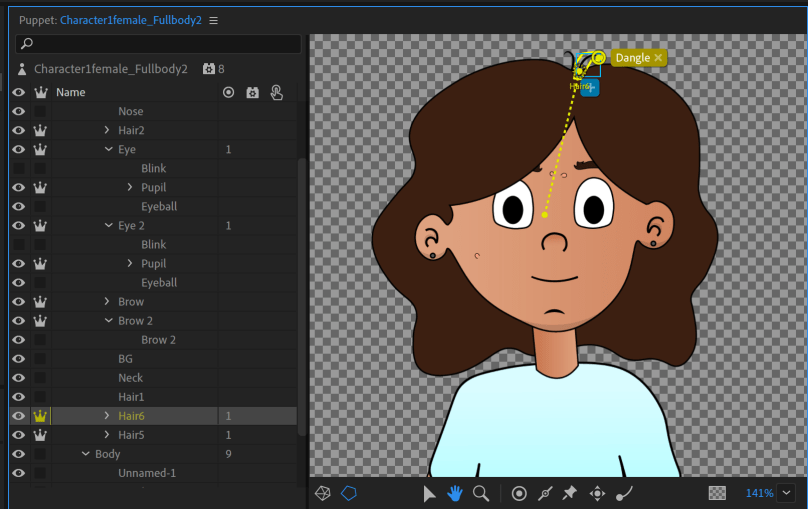
The next thing I learned from the video was the features of dangle tool and fixed tool. First the dangle tool, it is important that within illustrator the layer you want to use the dangle tool on must have a “+” in front of the name so that they can move on their own. I dragged the origin handle to the bottom and then used the dangle tool to place a marker. This gives the effect that the hair is moving independently.

Screen Shot 2019-04-25 at 15.00.51

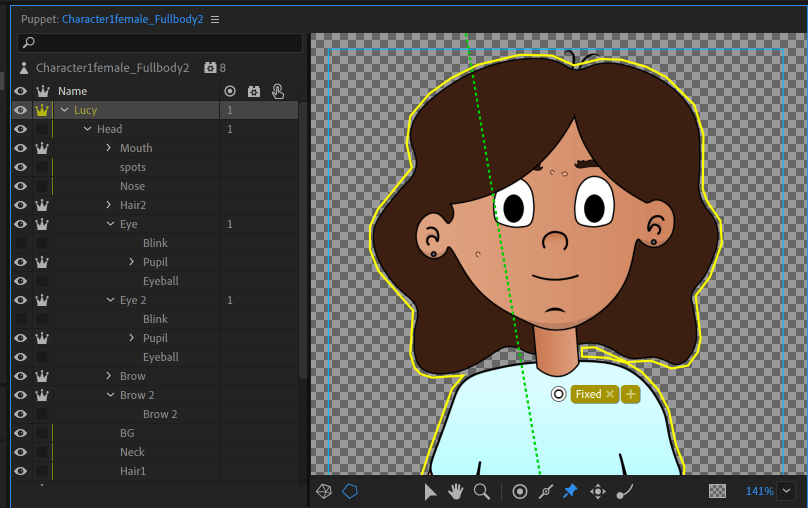
The second feature I learned about was the fixed tool. This tool is handy as it will keep the character moving from that spot when animating.

Screen Shot 2019-04-25 at 15.01.11.png

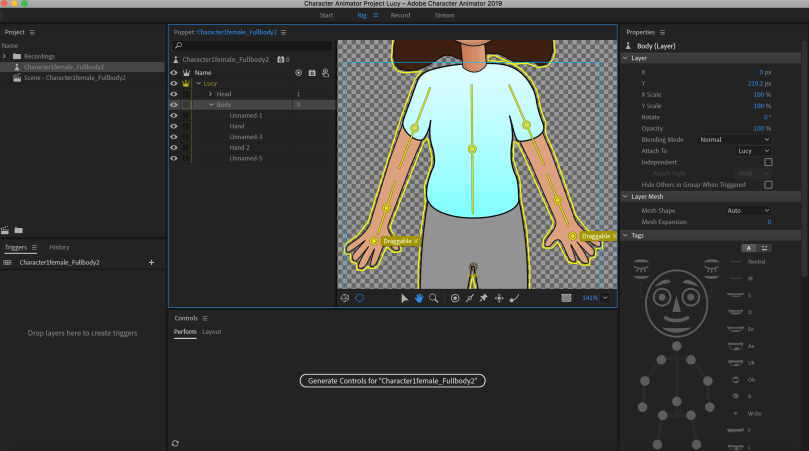
Then I learned about the draggable and stick tools. These tools are used when creating movement for the body of the character. Placing a draggable mark on the hands of the character allowed me to move them. But to make this more realistic I added the stick tool along the top and bottom of the arm. When move the arm now it bends at the elbow.

Screen Shot 2019-04-25 at 14.32.32.pngScreen Shot 2019-04-25 at 14.57.05.png

Recording and Editing

Screen Shot 2019-04-25 at 15.38.44

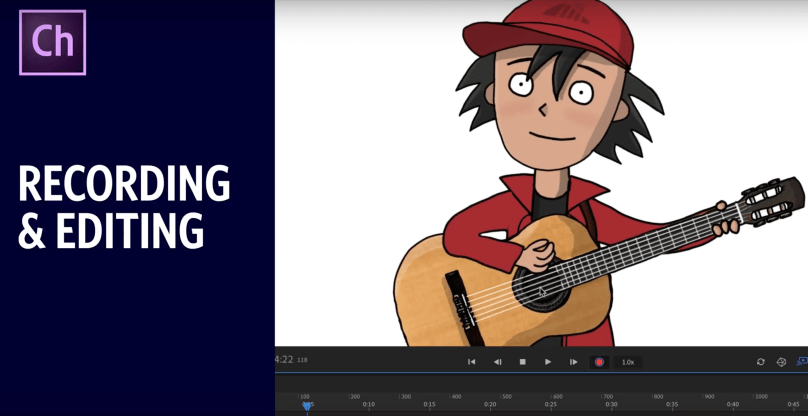
To learn how to record and edit within Character Animator I watched Dave’s video called “Recording & Editing (Adobe Character Animator Tutorial)” (Werner, 2018). I learned the best techniques for recording and editing such as arming and disarming behaviours, blending multiple performances together and fixing lip sync tracks.

The knowledge gained by studying this YouTube channel developed a new skill that was highly useful when creating the animations for the Let’s Talk app.


References

Adobe.com. (2019). Buy Adobe Character Animator | 2D character animation software. [online] Available at: https://www.adobe.com/ie/products/character-animator.html?gclid=EAIaIQobChMIrKmYiP3q4QIVlvhRCh0_swriEAAYASAAEgKcevD_BwE&sdid=88X75SKS&mv=search&ef_id=EAIaIQobChMIrKmYiP3q4QIVlvhRCh0_swriEAAYASAAEgKcevD_BwE:G:s&s_kwcid=AL!3085!3!340726103906!e!!g!!adobe%20character%20animator%20cc [Accessed 10 Feb. 2019].

Werner, D. (2019). Okay Samurai. [online] YouTube. Available at: https://www.youtube.com/user/okaysamurai [Accessed 13 Feb. 2019].

Werner, D. (2016). Making Your First Character – ARCHIVED (Adobe Character Animator Tutorial). Available at: https://www.youtube.com/watch?v=_smLXODTd6U&t=918s [Accessed 13 Feb. 2019].

Werner, D. (2018). Recording & Editing (Adobe Character Animator Tutorial). YouTube. Available at: https://www.youtube.com/watch?v=XolxHNixBpA&t=31s [Accessed 15 Feb. 2019].


UX Requirements – Let’s Talk

It is important to first outline and identify the user experience (UX) requirements of “Let’s Talk” before advancing to developing the visual identity. This is a vital step because recognising and identifying the needs and objectives of the project will allow for the development of a good UX strategy and brand identity. When identifying the UX requirements of the application I will discuss the business, user and system requirements, which all have varying levels of importance, of the project. Understanding and establishing these three factors will allow for the creation of an effective solution in relation the the UX design.

Firstly, consider the business requirements, which are the most important when developing the UX of the application. Business requirements give clarity on the project’s objectives. They outline the project’s benefits, to both the developers and expected end user. This project’s intention is to create a safe and informational approach to educating children on sex and puberty, while encouraging an honest and open discussion at home. The developing team intend to address the lack of resources for educating children on puberty and sex by developing an e-learning application tailored to providing sexual health education to pubescent and prepubescent individuals. The ultimate goal of the application is to reach a standard, which demonstrates that with proper funding the application would be a commercially viable endeavour. “the business requirements should be discovered, understood and clearly defined for the project to be a success.” (Robin, 2018)

User requirements follow the business requirements in importance. User requirements document their needs and what they are intended to do when interacting with the system. One of the main user requirements of this project is the ability to use the application as an informational tool when learning or discussing the topic of sexual and health and puberty. In depth user requirements are necessary when developing a successful UX.

Finally the system requirements refer to expected functionality that the application developer will use to build the system. These requirements specify what the application will capable of. System requirements can be split into two separate headings.

  • Functional requirements
  • Non-functional requirements

Functional Requirements

Functional requirements refer to the how the system will perform. These requirements specify the expectations of the application, but not how there requirements will be delivered. Examples of the functional requirements of the application “Let’s Talk” include:

  • The ability to retain the users information.
  • Users must be assessed on the information being provided by the application.
  • Clicking a title on the diary page directs you to that chapter.
  • Clicking the book icon opens or closes the page on screen.
  • Tapping the background graphics animate an element on screen.

Non-Functional Requirements

Non-functional requirements refer to the remaining requirements. They specify standard that assess the functionality of the application. Examples of the non-functional requirements of the application “Let’s Talk” include:

  • The performance of the application for example load times.
  • Usability.
  • Security.
  • Capacity.

The system requirements are one of the most vital components when developing a successful UX. System requirements place functionality to the forefront to ensure that the UX meets the user’s expectations of the application

E-Learning App Research

What is eLearning?

eLearning, or electronic learning, is the delivery of learning and training through digital resources. The material is is provided through electronic devices such as computers, tablets and mobile phones that are connected to the internet. (McNamee, P. 2018).

“…traditionally, the internet has been seen as a place where sexual misinformation thrives and harmful sexual paradigms propagate, a new class of educators is trying to change that stigma. By presenting accurate and accessible information combined with the latest advancements in technology, sex education advocates across the country are using eLearning to promote healthy sexual attitudes and pedagogy.” (Heikkela, 2018)

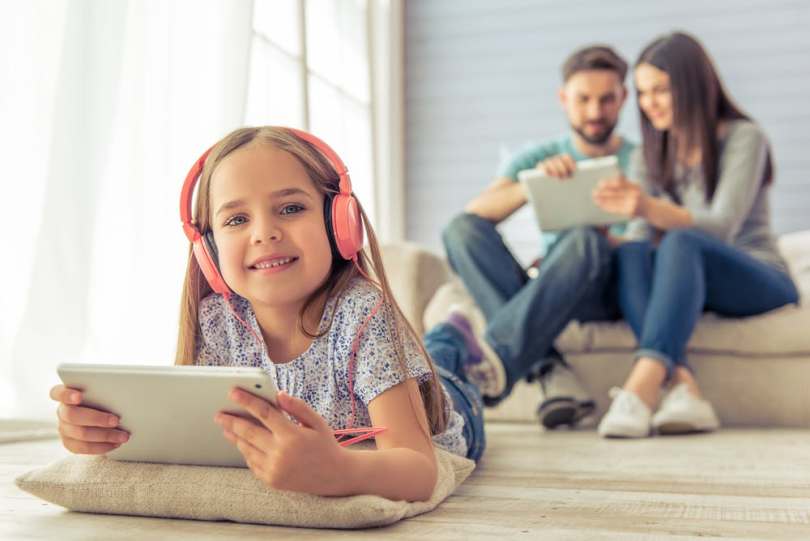
E-Learning opens up a wide range of innovative opportunities which could help to educate children and teenagers to a better knowledge of sexual education. Many children love using technology so it makes sense for a new technological approach to learning is introduced. When a child wants to pick up their tablet and play a game they might decide to jump into an eLearning app too. It’s an easy way to keep them interested and engaged to the learning activities on their screen. The advantages of eLearning is how easily accessible and cost effective it is. You can dive in to the app at any time and pick up where you left off.

Image result for tablet learning

Assure Model

Image result for assure model

ASSURE is an Instructional Design System that focuses more on the learner. The goal is to produce more effective teaching and learning. The Assure Model will help us in creating our App “Let’s Talk” by keeping us focused on the key aspects of a successful E-Learning app. (Kurt, 2015)

  • Analyse Learners – To be able to create a suitable learning strategy you must first understand your learners. To gain a greater understanding of the learners we will analyse the learners characteristics.

The general characteristics of our learners are that they range between the ages 8-14 as these are the average ages that children start to go through puberty. There is no particular level of education or previous knowledge that a learner may have as it is unclear to know how much a child knows on the subject, as everyone is different in that regard. They are comfortable using technology for fun as well as educational purposes. They find apps engaging and are curious about what changes their body is about to go through during puberty.

With regards to entry competencies, this program focuses on children therefore all they will require are basic literary skills that the majority of children in that age group will have as a result of schooling. The learning styles will feature a mixture of Visual, Auditory, and Verbal learning, as well as being interactive to keep the child interested in learning. The motivation the learner (i.e child) holds is to be prepared for the changes about to happen to their bodies such as a first period or pubic hair.

The learners will work through the app at their own pace. It will be suggested that the parent can go through the app with them, there will also be a pdf available for the parent so they know how to talk to them about this sensitive topic.

  • State Objectives – This tells us what the learner will be able to do as a result of the instruction. We can use these objectives to assess the learner’s progress. 

Growing and Changing –

There are a huge number of things the child will learn as a result of having an education in sex and puberty. They will begin to realise that growth and change are part of of growing up and are unique to each individual. E.g physical, social and  intellectual. These changed continue throughout your whole life. Learners will be able to identify emotional changes that have taken place since infancy as a result of hormones. They will also begin to appreciate the need for privacy’s well as recognising how independence and responsibility increases the older they get. 

New Life –

Learners will become aware of new life and birth in the world and develop an awareness of human birth. Learners will be able to discuss the stages and sequence of the development of the human baby from conception to birth. 

Knowledge about my body

Learners will begin to appreciate the need and understand how to care for his/her body, and respect their own body and the body of others. Learners will be able to name parts of male and female bodies using appropriate anatomical terms. Learners will explore and discuss the different things the body can do. Learners will develop and practice basic hygiene skills. Learners will understand the changes taking place in both male and female bodies and realise that these changes do not take place at the same time and that this is natural and normal. Learners will understand the relationship between health and hygiene.

  • Select Media & Materials

Given the stated objectives the next step is to select media suitable to achieve these objectives. We want to take a storyline approach, including animations and interactivity in our app. We decided this was a good idea as the storybook format will allow us to age the character and interest the user, as well as the interactivity including them in their learning as opposed to it being taught at them.

  • Utilize Media & Materials

This step involves planning how to make use of the materials selected in the previous step. This step is comparable to some project management processes. The media will be incorporated into each chapter of the app. The app will use animation and interactivity to thoroughly go through each chapter and engage the user throughout. The animations will also have a voiceover.

Is it selected on the basis of student need?

Yes, we believe the media will be useful to the student because it will not only inform them but engage them in their learning.

Is it appropriate for the teaching format?

We think it is appropriate to include engage the learner to make sure they are grasping the sensitive information.

Is it appropriate for the technical format?

We think it would work well as long as there will be no need for an internet connection once the app is downloaded.

Is it consistent with the students’ capabilities and the instructor’s teaching style?

Both the students capabilities and the teacher’s style would be catered for as the animations will be descriptive.

Does it help to meet the learning outcomes?

Yes because it reinforces the information and gives the learner something to interact with.

  • Require Learner Participation

This plans how to actively engage your students in the material that is being taught. We must ensure that the learners are taking part in the learning process. We will facilitate this by having the chapters laid out in a way that would be easy for learners to follow along with and have a character guiding the interactivity aspect of the app so the user knows how and when to participate.

Feedback will be provided when the user gets through a chapter, for example puberty they will get a badge to signify the completion of the chapter and what they have learned. Material in the form of animations will be utilized to give reinforcement of the information and be a guide to learners.

  • Evaluate & Revise

This includes an evaluation of the teaching strategies and the technology, media, and materials used. A plan how we will evaluate the success of our techniques, media and learners progress will be carried out once the app is created and tested on users. 


Appeal of animation

To start I will be talking about the appeal of animation. Animation is used all over the world for numerous forms of media. Such as animated films, music videos, advertisements and educational videos. Animation attracts a lot of attention as it is engaging.

So why is animation appealing?

Appeal is one of 12 principles of animation. As audiences like to see charm, a well thought out design, simplicity and quality. A weak drawn design or drawing can lack appeal for the viewer. Also a design that is complicated can also lack appeal. So having a balance is key. Using awkward shapes and unrealistic moves can have low appeal. (Lasseter, 1987)

Appeal is anything a person likes to see, a quality of charm, pleasing design, simplicity, communication and magnetism. “Your eye is drawn to the figure that has appeal, and, once there, it is held while you appreciate what you are seeing. A striking, heroic figure can have appeal. A villainess, even through chilling and dramatic, should have appeal” (Thomas and Johnston, 1981 p68)

Having well thought out drawing adds to appeal “Only simple and direct attitudes make good drawings and without good drawing we have little appeal” (Thomas and Johnston, 1981 p69) Also  having a simple design can benefit the characters appeal “Believe it or not, simplicity is the key to designing good characters. Many times, the most amazing characters turns out to be the simplest to construct.” (Maestri, 1996, p.10)

There is a difference between appealing animation and unappealing animation is that they are not limited to subject matter, what matters is how you present your concepts, ideas and emotional highs/lows to the viewer. The important thing about appeal in animation is that the viewer feels the character is real and interesting. To help make a better connection between the character and viewer, the character must be likable and have baby like face, such as bigger eyes tends to be effective especially for children. Appeal includes having an easy to read design, solid drawing and having personality. There is no exact formula for getting this right but it starts with a strong character development and being able to tell the story through the animation. (Hurd, 2017)

Animation appeal also lies in the personalities it creates. It allows characters to develop a personality. Their actions, attitudes and appearances must mesh to create a well rounded character who will capture and keep the attention of the viewer. (PowerHouse Animation Studio, 2019)

Some examples of character with appeal:

-Exaggerated features for example bigger eyes

-Bright colours

-Simple design not overly complicated

Another factor that makes animation appealing to children is when the child can be part of the story. For example with shows such as Mickey Mouse Clubhouse. where the characters like Mickey Mouse talk to the child breaking the fourth wall and asking them questions to help with the progression of the story. (Kaur, 2014)

11

Animation has a universal appeal because it can be created to suit virtually anyone’s preferences. For example bright colours and simple designs can be used to create characters for children and more detailed designs can be aimed more towards adults. This versatility allows animation to adapt itself to the preferences and needs of their target audiences, regardless of their age allowing it to appeal to almost everyone. (PowerHouse Animation Studio, 2019)

References:

Hurd, E. (2017). Appeal: The 12 Basic Principles of Animation | Animation Mentor Blog. [online] Animation Mentor Blog. Available at: https://blog.animationmentor.com/appeal-the-12-basic-principles-of-animation/ [Accessed 6 Feb. 2019].

Kaur, R. (2014). Why kids love cartoons so much?. [Blog] MyIndia. Available at: https://www.mapsofindia.com/my-india/society/why-kids-love-cartoon-so-much [Accessed 3 Feb. 2019].

Lasseter, J. (1987). Principles of traditional animation applied to 3D computer animation ACM SIGGRAPH Computer Graphics, 21(4), pp.35-44. [Accessed 6 February 2019].

<http://delivery.acm.org/10.1145/40000/37407/p35-lasseter.pdf?ip=157.190.0.142&id=37407&acc=ACTIVE%20SERVICE&key=DC7B1EB778A804A9%2E4D4702B0C3E38B35%2E4D4702B0C3E38B35%2E4D4702B0C3E38B35&__acm__=1557478828_7ed7d146f143f21209c977c253748f5b>

Maestri, G. (1996). [Digital] character animation. Indianapolis: New Riders, p.10

PowerHouse Animation Studio, I. (2019). What Makes Animation Appealing?. [online] Slideshare.net. Available at: https://www.slideshare.net/powerhouseanima/what-makes-animation-appealing [Accessed 3 Feb. 2019].

Thomas, F. and Johnston, O. (1981). The Illusion of Life Disney Animation. New York: Walt Disney Productions, pp.68 69.


Interaction in Our Application : Competitor Analysis


To get a sense of what types of interaction will be used in our application, competitor analysis of interactions in other storybook applications was completed. By analysing the interaction in other applications it will not only give me inspiration for the interaction in our application, it will also give me an idea of how this interaction could be facilitated. This post will detail the findings of my analysis of the interactivity of applications including : The Wizard of Oz, Cinderella and Dear Diary.

The Wizard of Oz

This application by Tabtale opens on a home screen that allows you choose whether you read the story or play a paint style game. The home screen gives an option for parents, which gives them information about the application, this is a helpful feature. The story itself comprises of screen and and illustration with a looped animation on the screen. The voiceover of the story is automatically read out the text can not be seen on screen, this would be a disadvantage. The storybook has interactions within the illustration, such as for example you can turn on and off a lightbulb.

Dear Diary

This application allows users to read the diary of a teenage girl, each entry describes different days of her life, as you read you are given option to choose from that will influence the story going forward. There is no voiceover in this application, all the text is onscreen. The buttons you press have sound effects on click.

Cinderella

Another application by tabtale, this one is not dissimilar to the wizard of oz storybook, however this application allows you to have the story read to you, in other words the voiceover plays, or to read the story but yourself. It allows incorporates the game into the story allowing users to play the games as they read. Some parts of the illustration are animated and they make sound effects and play a further animation upon interaction with them. If the user chooses to have the story read to them the interaction is available straight away, if not then the user must read the story before they can access the interactivity.

.

Elements that would transfer to our application include the sound effects on buttons, having some onscreen elements animate automatically, having games incorporated in the story and allowing the user to either read themselves or have it read to them.

Background to ‘Let’s Talk’

This post aims to illustrate the main inspiration for this project, which is the changing attitudes towards sex in Ireland. Beginning with a history of sexual repression in Ireland, the contrast between the old fashioned Catholic belief system and Ireland’s current, more progressive, stance on sex and sexuality is discussed. This is then followed by analysis of the current education system, including the 2019 report on the current relationships and sexuality program by the House of Oireactas. Finally, the importance of proper sexual education to overall sexual health and the role of both parents and educators in this is discussed

As a nation, Ireland spent the majority of the 20th century still heavily influenced by the Catholic Church. By comparison to other countries in the developed western world, attitudes towards sex in Ireland were considerably more conservative up until the 1970’s.‘Sexual repression seemed to intensify in Irish Catholic culture as the nineteenth century progressed’  (Fahey T. 1999 p.253) Perhaps because of the influence of the catholic church, people in Ireland had negative connotations towards behaviours, such as premarital sex and contraception, that were becoming commonplace in other western countries. Change came in Ireland as a result of external pressure to conform with the more progressive attitudes of other european countries, as opposed to internal societal pressure. The majority of western countries had embraced the sexual freedom movement by the time Irish people began to challenge the sexually repressed culture of their time. ‘Most Western industrial countries have experienced, in the decades after 1960, tremendous change in attitudes and behaviours in areas such as women’s role in society and sexual freedom. In Ireland, however, these changes occurred in the context of the wider pressures of industrialisation and urbanisation that took place long after they happened in other countries in Europe’ ( Crisis Pregnancy Agency, 2006, p. 8)

The influence of the Catholic Church in Ireland affected all aspects of society in Ireland at this time, from education to media. The education system at the time was predominately run by religious orders, and sex education often took the form of abstinence only sex education. Before the reformation of the Relationships and Sexuality Education (R.S.E)  in the mid 1990’s, abstinence only sex education was the main type of sex education in Ireland. The media in Ireland was also heavily influenced by the repressive attitudes towards sex in the country. There was stigma around topics such as premarital sex, contraception, sexuality and abortion. Contraception itself was illegal in Ireland until 1980 but it’s use was still frowned upon at that point. When Gay Byrne produced a condom on television during a conversation about the aids epidemic in 1987 it caused outrage.(“Late Late Extra”, 1987) There was a refusal amongst the older generation to embrace the use of contraception and it was still considered shameful to even see a condom. ‘It should also be remembered that, until comparatively recently, sexual discussion, public policy on sex and sexual behaviour itself all occurred within a cultural framework that was significantly influenced by Catholic social and moral teaching.22 The Catholic ethical framework was the dominant framework in Ireland until the 1960s; concerns about sexual probity were part of daily life and were enforced, to various degrees, throughout Irish society’ ( Crisis Pregnancy Agency, 2006, p. 9) Ireland was behind the times in comparison to other western countries who, by this point, had a much more liberal perception of sex and sexuality.

The last three decades have seen an complete transformation in public attitudes towards sex and sexuality in Ireland. The conservative mindsets of previous generations have now been replaced by the progressive and tolerant mindsets of younger generations. Ireland is now a population that  predominantly have an awareness of the concept of sexual health and a willingness to talk about issues surrounding sexual health. Compared to previous generations we are generally more accepting of all sexualities, sexual health practices and premarital sex. ‘The first large-scale study of sexual health and relationships in the State, published yesterday, found just six per cent of people now think premarital sex is always wrong, compared to 71 percent of people back in 1973’ (Donnellan, E. 2006) Ireland has come a long way from the repressed culture of the 1970’s, and done so in a relatively short space of time. This however, isn’t without its challenges. With the advent of the internet and the globalisation of media we have more information about sex than ever before.“Recently we’ve shifted from absolutely no conversation to now having the internet with absolutely everything about sex instantly accessible on people’s smartphones.”(‘Why sex should no longer be a dirty word’, 2018) Given that only forty years ago the use of contraception in this country was illegal, we are not properly equipped to deal with this level of information within the education system.

A review of the current curriculum for RSE was requested on April 3rd, 2018. The current curriculum is outdated, being over twenty years old, and isn’t properly representative topics such as consent, sexually transmitted infections (STI’s) and LGBTQ+ sex. The review of the current curriculum was published on the 29th of January 2019, and it called for a complete overhaul of the current curriculum. “The Committee noted that the curriculum for SPHE was published in 1999 and believes that this needs to be updated. Additionally the curriculum needs to be delivered to students from an earlier age”(Houses of the Oireachtas, 2019, p.26) Not only was it stated that the curriculum needed to be delivered to children at a younger age, it was also stated that LGBTQ+ sexual health issues should be included in the new curriculum. “Consideration should be given to the inclusion within curriculums of LGBTQI+ specific sexual health issues and the presentation of LGBT relationships without distinction as to their heterosexual counterparts” (Houses of the Oireachtas, 2019, p.27). As a large proportion of schools in Ireland align their ethos to a certain religion, it was observed that it is essential that this does not affect the sexual education of their students. “A new report from a group of TDs has found that religious schools should lose the power to influence sex education in line with their own ethos.” (Digital Desk Staff, 2019). As it is currently part of the law that schools can teach RSE from a standpoint that is in line with their own ethos, it was suggested that this education be given by groups external to the schools themselves.“The Education Committee recommends that outside groups that are brought in to schools to deliver Relationships and Sexuality Education, which will be regulated by the Department of Education or the Health Service Executive to ensure that accurate information is being given to students.” (O’Kelly, E. 2019). It was also suggested that the law that allows schools to create their own policies around RSE which reflects their ethos be amended promptly. “The Committee recommends that the Education Act 1998 be amended or at least reviewed, so that ethos can no longer be used as a barrier to the effective, objective and factual teaching of the RSE and SPHE curriculum to which every student is entitled.”(Houses of the Oireachtas, 2019, p.28). Along with other recommendations, it was advised that the new curriculum address issues concerning pornography. “The Committee recommends that the negative impact of pornography forms an integral and fundamental part of all discussions on and reforms of SPHE and RSE reinforcing positively framed sexual experiences.”(Houses of the Oireachtas, 2019, p.28). This review of the curriculum shows an awareness from the government that the current education system does not properly educate the youth for modern life. Although this review is a step in the right direction and was delivered within a year, the development of a new curriculum will be a lengthy task and it we can’t be sure when that new curriculum will be introduced.

Although it is easy to solely fault schools for the current state of sex education in Ireland , parents are not without blame. Article 42 of the constitution of Ireland names the family as the primary educators of a child, and it has been revealed that parents taking a proactive approach to sex education is beneficial for their children. ‘A simplistic solution would be to argue that school should be the primary educator of young people about sex. However, extensive research shows that parental involvement in sex education can have an extremely positive impact on the subsequent behaviour of young people, encouraging later sexual initiation, higher prevalence of protective behaviours and greater confidence in negotiating sexual relationships.’( Crisis Pregnancy Agency, 2006, p. 284). Understandably it is difficult for parents to educate their kids properly about sex when they themselves received an inadequate sex education. Nonetheless parents should make it a priority to properly educate themselves and create open conversation around sex in the home. “Parental involvement in sex education can serve to reinforce, and often supplement, key messages received about sex in school and can impact on their child’s sexual health in the future. Recent national research found that fewer parents surveyed in 2010 have talked to their children about sex and related topics (70%) than those surveyed in 2003 (82%)” (Kelleher C, Smith G, Bourke A, Boduszek D, McBride O, Morgan K.,2013) According to research parents are becoming less willing to talk to their kids at home about topics like sex. Being failed by both the education system and their parents, the youth of today are turning to the internet for information about sex.“In the absence of proper sex education and unable to talk to their caregivers, children will seek out information online.”(‘Why sex should no longer be a dirty word’, 2018). We cannot blame the youth for searching for information about sex, when sexual scenes becoming more common in movies, tv shows and video games. There is more pressure on youths today to be knowledgeable about sex, and people are becoming sexually active at younger ages than before.

The reform of sex education is important as proper sex education contributes towards good sexual health as individuals progress through life. The World Health Organization defines sexual health as “a positive and respectful approach to sexuality and sexual relationships, as well as the possibility of having pleasurable and safe sexual experiences, free of coercion, discrimination and violence.” (World Health Organisation 2006, p.5 ) This definition includes both the physical and mental aspects of sexual health, asserting the importance of consent, respect and safety in sexual health. Sexual education is important because it can set an individual up with a positive attitude towards sexuality from a young age, eradicating the fear and confusion that is often associated with early sexual development and encounters.  ‘Sexual development is often typified as something problematic to be contained and controlled, especially for girls. This characterization often has more to do with the anxieties, fears, and beliefs of adults than the reality experienced by adolescents’ (World Health Organisation 2006, p.7 ) We must strive to create an educational experience that is inclusive, free from stigma and equips youths with the tools necessary for adulthood before they are in a situation they are not prepared for. ‘Sexuality education must seek to promote health and well-being, as well as sexual rights.’(World Health Organisation 2006, p.18 ) The ideal sexual education system would place importance on all aspects of sexuality.

References

Crisis Pregnancy Agency (2006). Irish Study of Sexual Health and Relationships (ISSHR), October, UCD viewed on 01/02/2019 via <https://www.ucd.ie/issda/static/documentation/esri/isshr-report.pdf>

Donnellan, E. (2006) ‘Irish attitude to sex undergoes dramatic shift over 30 years’ Irish Times, 17 October, viewed 01/02/2019 via <https://www.irishtimes.com/news/irish-attitude-to-sex-undergoes-dramatic-shift-over-30-years-1.1016414 >

Digital Desk Staff (2019) ‘Report to call for reform of Ireland’s 20 year old sex education programme’ Breaking News.ie, 29 January, viewed 01/02/2019 via <https://www.breakingnews.ie/ireland/report-to-call-for-reform-of-irelands-20-year-old-sex-education-programme-900823.html>

Fahey T.(1999) ‘Religion and Sexual Culture in Ireland’ The British Academy , viewed 01/02/2019 via <https://www.thebritishacademy.ac.uk/pubs/proc/files/79p241.pdf>

Houses of the Oireachtas (2019) ‘Joint Committee on Education and Skills Report on Relationships and Sexuality Education’ Committee on Education and skills, 29 January, viewed 01/02/2019 via <https://data.oireachtas.ie/ie/oireachtas/committee/dail/32/joint_committee_on_education_and_skills/reports/2019/2019-01-29_report-on-relationships-and-sexuality-education_en.pdf>

Kelleher C, Smith G, Bourke A, Boduszek D, McBride O, Morgan K. Sex in Ireland in the last decade: sexual health research and its policy implications. IRCHSS Policy Brief. Dublin: Royal College of Surgeons in Ireland, 2013. [online] Available from URL :  https://epubs.rcsi.ie/cgi/viewcontent.cgi?article=1053&context=psycholrep (accessed 7/11/2018 and again on 25/11/2018)

Late Late Extra  1987, Television Programme, RTE, 16 May, viewed 01/02/209 via <https://www.rte.ie/archives/category/society/2017/0504/872557-condom-controversy/>

O’Kelly, E. (2019) ‘Sex education outdated, ethos should not influence teaching – report

RTE, 29 January, viewed 01/02/2019 via <https://www.rte.ie/news/education/2019/0129/1026159-sex-education-schools/>

‘Why sex should no longer be a dirty word’(2018) Irish Examiner, 23, October, viewed 01/02/2019 via <https://www.irishexaminer.com/breakingnews/views/analysis/why-sex-should-no-longer-be-a-dirty-word-878393.html>

World Health Organisation. (2002). Defining sexual health: report of a technical consultation on sexual health, 28-31 January, Geneva. Geneva, World Health Organization, viewed 01/02/2019 via <https://www.who.int/reproductivehealth/publications/sexual_health/defining_sexual_health.pdf>

Bibliography

Burke, E. (2018) ‘Sex, power and control of communication: What porn studies can teach us’, Silicon Republic, 17 August viewed 01/02/2019 via <https://www.siliconrepublic.com/innovation/caroline-west-sexuality-studies>

Research on Application Development

My main responsibility for this project is the technical side of developing the application. I have decided to research all options available to us to ensure we choose the right option for our project. This post discusses both the research and the practical work I completed over the first three weeks of the Semester to help me properly understand our options with regards to application development. My work began with desk research and then began to evolve into getting hands on in an attempt to understand the tools that we have at our disposal.

Week One 28/01/2019

IOS Vs Android

This is a huge question that you have to considering when first developing an application and there are numerous factors to take into account. Demographically speaking iOS is a platform generally associated with more affluent users, it is the prominent platform in the US and it’s users and more inclined to spend money on applications. ( Teleman, Costi 2017 ) Android is the prominent platform in developing countries and amongst users who are spend money more consciously. Android is also much more prominent globally. (Katariya, Jayanti 2017)

“You have to consider the whole Android family-from low-range to mid- and high-range iterations when developing and designing your apps. ”

( Teleman, Costi 2017 ). Screen sizes and resolutions can be a difficult aspect of app development for Android because of the open nature system, many different brands and ranges of smartphones exist within the Android family as opposed to iOS which has a more standardised range of screen sizes and resolutions.

Development time is significantly shorter for iOS and hence it is much cheaper. iOS development requires a program called X Code which is only available on Mac. Android development can prove much more time consuming, it requires a program called Android Studio which uses Java and is available on Max, Windows and Linux. ( Teleman, Costi 2017 ).

It is generally agreed, from the resources I have read, that app development is easiIt is generally agreed, from the resources I have read, that app development is easier for IOS. Seeing as we have all got iphones and and ipad this would seem like the most sensible approach for us to take. App Development for IOS requires you to use the program Xcode and the scripting language SWIFT. The issue however lies within the fact that my laptop is a windows laptop, and as I am mainly in charge of the app development side of the project, this may cause an issue.

There are several solutions availible for this issue

  • Use the Macs availible to me in college to complete the coding needed.
  • You can pay for a service which allows you to remotely access a mac os from your PC and hence develop using said virtual OS. The fee for this service is 1 dollar an hour or 20 dollars a month. ”
    Before committing to buying a new Mac, you can actually “rent” one for development. You’ll remotely access the Mac and Xcode through your PC. “(Ching, Chris 2019)
  • We could also use a program like phone gap which allows you to use HTML, CSS and Javascript to develop an application that works on both IOS and Android

Week 2 04/02/2019

Phone Gap

The first option I have looked into using for developing our application is the adobe program PhoneGap. This program allows you to use basic principles of HTML, CSS and Javascript to create an application suitable for both iOS and Android.

I found this software extremely easy to use however I found a slight issue in the fact that the PhoneGap developers app was removed from the app store by apple recently and the issue hasn’t yet been resolved. As I only have an iOS mobile device currently at my disposal I couldn’t test the application on an actual device, only on my browser.

Below is the link to the extremely simple application I created using this software. I created this app to gauge which software will be the best for us to begin to develop our final application.

Pros

  • Applications can be exported to either iOS or Android
  • Relies on HTML, CSS and JavaScript which I already have knowledge of
  • Can use Cordova to access the functionality of the phone hardware
  • Fast and efficient testing using the PhoneGap Developers App

Cons

  • No UI widgets availible
  • PhoneGap developers app not availible on iOS

Phone Gap Test Application

Tutorials Watched

Week Three 11/01/2019

Android Studio

Now, although it is said that android development is slightly harder, it may be the solution to the issues with my laptop being a PC. Android development requires an application called Android Studio which can be used on Mac or PC. This would allow us to develop on any computer however we would have to display on an android device, which we are not currently in possession of. There are ways around that though such as using an android emulator or buying a cheap android device such as the lenovo 7″ tablet for around 50 euro.

I attempted to make a simple application in Android Studio Similar to the one I made in Phonegap However I really struggled with it. Android studio requires the programming language Java of which I don’t have any prior knowledge. to get a handle on Java I completed the code academy course on Java. I also found some manuals on learning Android Studio in the CIT library which would be useful if I were making a full application. I also watched some tutorials on Android Application Development.

Tutorials and Books Mentioned

The main issue I forsee with using Android Studio is the complexity of Learning Java from scratch and understanding it well enough to be able to develop a full application using it. I can follow the tutorials and books aforementioned however I am just copying what hey are doing in the tutorial and I have a very minimal understanding of how this works. This would become a big issue when I am trying to implement our own application as there will be no direct tutorial to follow. I am not confident in my ability to transfer my knowledge of Java from a tutorial and apply it to our own project.

Pros

  • Availible on Mac, Windows and Linux
  • Free Software, plenty of online learning resources
  • Would result in me havng a greater knowledge of Java

Cons

  • Would require me to learn a whole new scripting language from scratch
  • I have found Java very difficult up until this point and doubt my ability to transfer my learnings of onto our project
  • Development Process would probably be more time consuming as I can only use a certain amount of the base knowledge I have as a result of my studies
  • Development for One platform only

Xcode

Xcode development is much simpler and swift is an easier language to get an understanding of . The issue however is the fact that I could only develop for iOS by using a Mac or virtually renting one. As I will be putting a lot of work in both at home and in college into this project, it just doesn’t make sense for me to develop the application using a program I would essentially have to pay per hour of usage at home. So I basically have ruled out the use of Xcode for developing this application but it always there as a backup option it would just require me to use mainly the college computers.

Pros

  • Straightforward Software
  • Developing for a standardised screen size and resolution
  • UI Widgets Available

Cons

  • Can only develop on a Mac (either physical or Virtual)
  • Requires learning swift, which despite being easier than Java is still a new scripting language
  • Development for one Platform Only
  • Requires us to display on apple device (more pricey)

Conclusions

I have decided to move forward and get into prototyping using PhoneGap. The pros of using PhoneGap far outweigh the cons. It will allow me to expand on the skills I have been learning over the past four years, I am comfortable coding in the languages required for using PhoneGap, the software allows you to develop for both Android and iOS platforms and this will allow me to prototype and test efficiently. After speaking to my supervisor and conducting all the above research we decided that this is the most sensible approach going forward for our project and I am happy with this decision.

Bibliography

Jayanti Katariya (2017) Apple Vs Android – A comparative study 2017 [online] Available from URL : https://www.moontechnolabs.com/apple-vs-android-comparative-study-2017/ [ accessed 02/02/2019 13:50]

Teleman, Costi ( 2017), Android vs iOS App Development: A Comparison and Decision Guide [online], Available from URL : https://dzone.com/articles/android-vs-ios-app-development-a-comparison-and-de [accessed 02/02/2019, 14:45 ]

CHING, CHRIS (2019), XCODE FOR WINDOWS (12 WAYS TO BUILD IOS APPS ON PC) [ONLINE] AVAILABLE FROM URL : HTTPS://CODEWITHCHRIS.COM/XCODE-FOR-WINDOWS/ [ ACCESSED 04/02/2019,

18:30]

Academic Paper Current Progress

Planning Our Project

One of the biggest challenges within this project will be project management. We have established that with a team of four people it may be difficult to both organise the project and present clearly defined roles at the end of the project. To combatt these issues we have decided to use some tools to help us keep track of where we are wih regards to the work we have done and the work that we will need to do.Gantt Chart

Gantt Chart

The gantt chart was created to help us visualize the progression of the project as a whole. It contains all the main tasks we envision ourselves doing, their progression, and who is responsale for said tasks. The advantage of the Gannt Chart is that it visualizes not only the tasks we have to complete but also the timeline within which they have to be completed. We will mainly use this at weekly meetings as a check in.

Trello

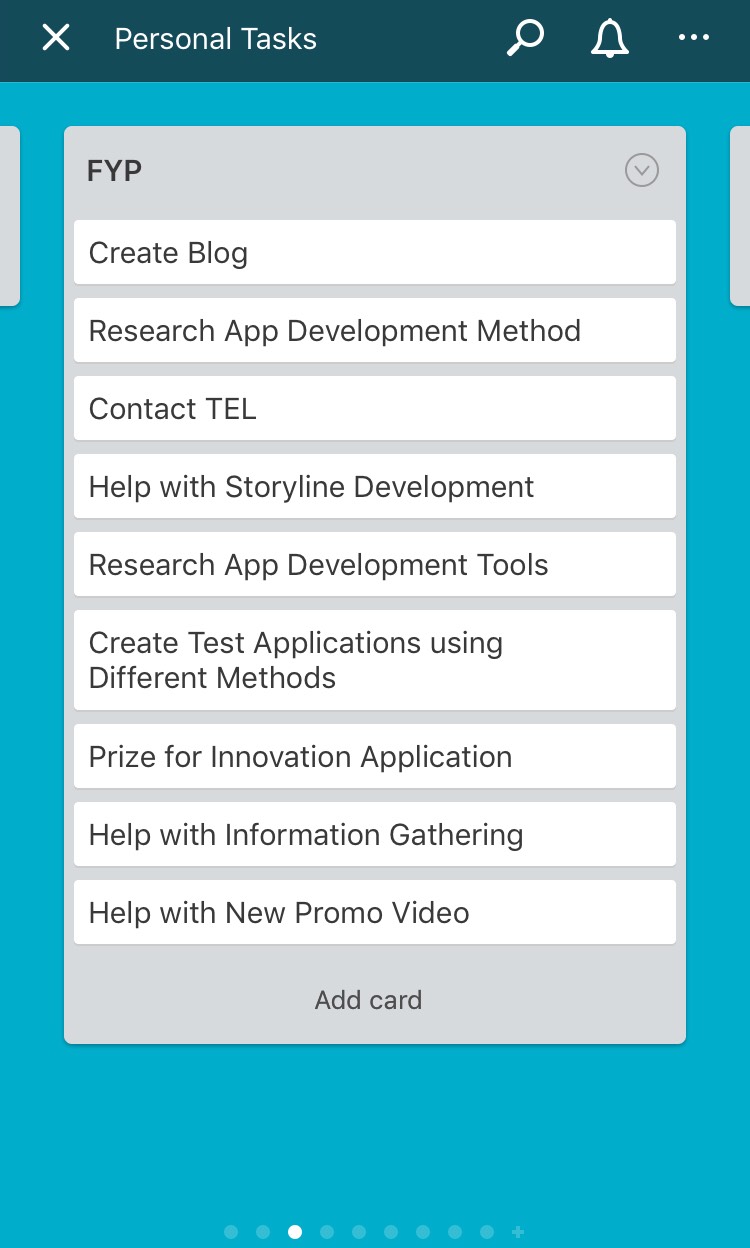
We will be using trello to keep track of the project on a day to day basis. Not unlike the Gantt Chart, trello is fundamentally a list of tasks broken down into sprints however, it’s more fluid and user friendly. We will be using trello to keep track of not only our own personal tasks but also the group tasks. It will be somewhat of an organisation tool and a communication tool for when we are working remotely on the project.

https://trello.com/b/DJDlUIzU/lets-talk-fyp

Personal Methods

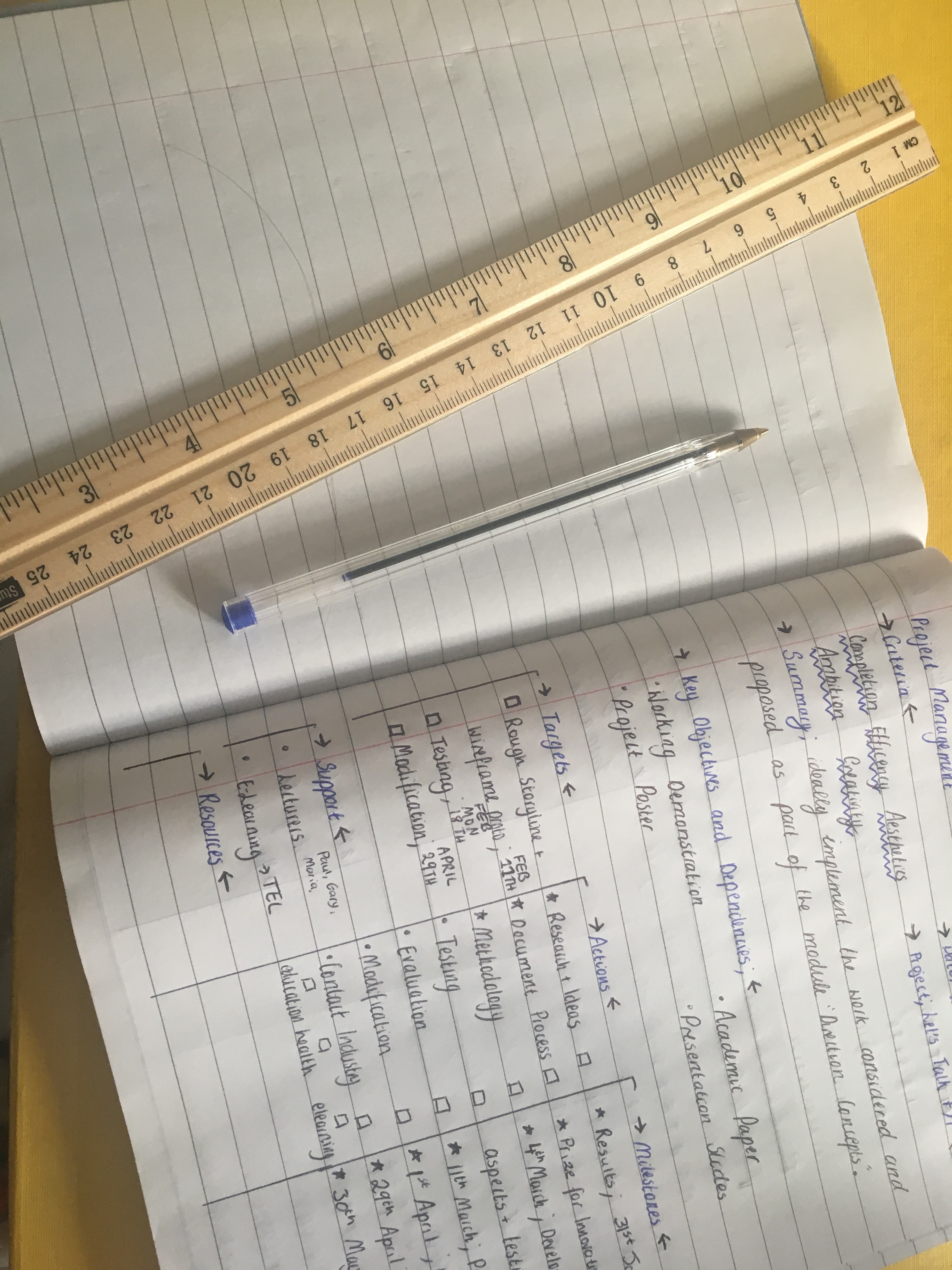
Alongside the planning we will do as a group it is also important to keep track of everything we are doing personally to ensure we stay on track overall. Personally I will be using my Personal Trello Board to stay on top of my workload, as well as a diary for important dates, notes and information.